
Milan, 23 January 2025: 2025 will be a crucial year for European companies. With the entry into force of the Corporate Sustainability Reporting Directive (CSRD) and the ESRS standards, large companies will be the first required to draft sustainability reports under the new rules. The impact of this change, however, will extend well beyond: SMEs too, though not obliged (listed ones will be from 2028), will be called on to answer growing demands for transparency from clients, supply chains and banks.
To face this challenge, The Good in Town, a benefit corporation that accompanies SMEs in the sustainable transition, and ESGmax, the cloud solution born inside the startup studio Startup Bakery that enables the participatory construction of the sustainability report, have developed PMI Smart Kit with the ambitious goal of helping Italian small and medium enterprises in the sustainable transition.
“The transition towards sustainability is an important challenge for Italian SMEs, which face obstacles of various kinds, including a lack of skills and resources. And yet many of them already have an intrinsic sustainability that deserves to be put to work, states Sara Serafini, managing director and co-founder of The Good in Town , We believe it is important to understand SMEs’ real needs and resources, helping them express the best of their identity and move forward in a balanced way, taking into account their own pace and, at the same time, regulatory and market demands. We are sure PMI Smart Kit is the right tool for companies taking their first steps in sustainability”.
The difficulties of SMEs in the ESG transition: numbers that tell the challenge
The transition towards sustainability is an urgent challenge for Italian SMEs, driven above all by the impact of European policies and regulations, which have more than doubled in recent years. However, the lack of institutional support and complex bureaucracy are a barrier that 48% of SMEs recognise as decisive. In addition, 47% of SMEs report the many difficulties in accessing adequate financing to support ESG investments, a condition that further aggravates the situation (SME EnterPRIZE 2023 White Paper, November 2024). Finally, new technical skills (54%) and new managerial skills (36%) are considered crucial by decision makers* (Wyser, Anticipating the future - The answers of managers and companies to the ESG challenge).
Other research highlights how, beyond skills, the difficulty of collecting accurate, complete and reliable data for ESG reporting that is credible and compliant, from now on, with the ESRS standards is perceived as an obstacle. (National Observatory on the Sustainability of Italian SMEs, The perception of ESG themes: momentum and challenges in Italian SMEs)
PMI Smart Kit: the sustainability toolbox
To answer the needs of small and medium enterprises, The Good in Town and ESGmax have created a toolbox that combines the digital and the human element to ease SMEs’ approach to sustainability and ESG ratings: over a span of 3 to 6 months, the company organisation will have acquired skills, developed awareness of its own ESG profile and risks, activated a digital twin for the collaborative collection of useful, secure data, identified a ‘smart’ roadmap of its sustainability goals, and mapped its ‘washing’ alerts. It will be ready for a sustainability report, answering compliance, client and bank demands.
“SMEs play a crucial role in the Italian economy, but they often face significant challenges in sustainability because of limited resources. The very language of sustainability is an obstacle to the transition, declares **Massimo Ferri, CEO and co-founder of ESGmax. “**This partnership lets us offer SMEs tailored support, combining our technological expertise with The Good in Town’s multidisciplinary skills in ESG consulting and communication. Together we can provide innovative solutions allowing companies to improve their sustainability profile and obtain concrete competitive advantages”.
Among the latter, access to credit. Companies with high ESG scores record a loan approval rate 11% higher than the average. Conversely, SMEs with low scores experience a 6% decrease in access to financing. (ESG Outlook by Crif)****.
“Banking policies today reward SMEs with transparent, structured and measurable ESG policies, because in them they recognise greater resilience and long-term stability”, adds Donatella Cambosu, co-founder of The Good in Town. “This means only one thing: that after the digital one, the sustainable transition is the new transition, and there is no going back. That is why it is very important for SMEs to face it as soon as possible, in order to stay competitive and carry out the right activities one step at a time, without last-minute rushes which, in sustainability, are hardly credible”.
Beyond easing access to financing, adopting ESG practices allows SMEs to gain an important competitive advantage. According to a further study, 68% of SMEs that invested in sustainability went from 54% growth recorded in 2022 to 68% growth recorded in 2023. This figure highlights how ESG credentials have become fundamental for SMEs wishing to enter sustainable supply chains and establish strategic partnerships. Sustainable companies not only improve their reputation but also strengthen the value of Made in Italy, answering the growing demand for transparency and sustainability from consumers and commercial partners.
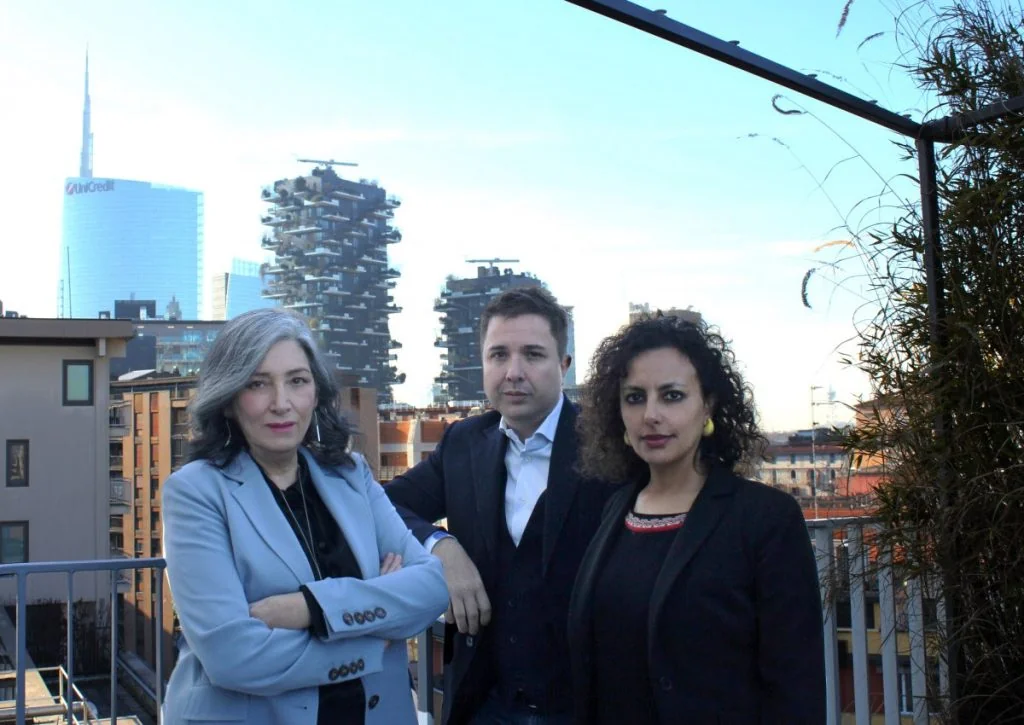
From left: Donatella Cambosu, Massimo Ferri and Sara Serafini
#
The Good in Town
The Good in Town is a benefit corporation that helps companies answer the new challenges of sustainability, turning problems into opportunities, with an inclusive approach, multidisciplinary expertise and measured costs. From risk mapping to step-by-step ESG paths, from training to positive-impact projects, from drafting the sustainability report to the ClaimSentinel service for ‘greenwashing’ monitoring, The Good in Town designs authentic paths integrated with the company’s business. The ‘purpose partnership’ with ESGmax is aimed at increasing SMEs’ opportunities to access sustainable development models, through the design and development of digital tools and services that foster purpose-driven strategies and innovation. Among its common-benefit purposes is the dissemination of themes tied to sustainable development, pursued through the site www.thegoodintown.it, dedicated to the positive, inclusive communication of “facts and people that change the world”. The company was founded in Milan by Sara Serafini and Donatella Cambosu.
ESGmax
ESGmax, the fourth startup born inside the Startup Studio Startup Bakery, is the platform that simplifies, automates and speeds up the collection, organisation and presentation of the data needed to draft the sustainability report. Thanks to the contribution of AI, ESGmax helps identify relevant areas to measure on the basis of the type of company and supports the creation of the draft through generative functionality. It acts as a digital assistant for the collection, sending reminders and notifications to contributors and approvers, enabling collaboration within the working group, eliminating useless emails and Excel files and channelling all collection activities onto a single shared platform. ESGmax is also part of the Zucchetti group which, together with Startup Bakery, has supported the initiative from its earliest phases, including through capital increases totalling 1.5 million euros.
Startup Bakery
Startup Bakery is the Italian startup studio founded by Alessandro Arrigo and Angelo Cavallini in February 2020 with the goal of bringing to life sustainable B2B SaaS companies with a strong Artificial Intelligence component, and of allowing founders, companies and professional investors to express their potential. Contrary to what usually happens in the Venture Capital world, Startup Bakery relies on the involvement of industrial partners to put its initiatives to work. This path aims to reduce the degree of risk of doing startups, while maintaining high returns for its Limited Partners. The Studio guarantees the serial application of tools, skills and methodologies already present in the team, and stands beside the co-founder through every phase, from the raise to the exit, making them progressively more independent. Thanks to a proprietary algorithm, it can count on advanced capabilities for collecting and processing market data in order to identify niches of interest to occupy, while the cyclical validation of the initiatives launched is guaranteed by the application of the lean method. To date Startup Bakery has launched and invested in 4 startups: Veterly (2021, PetTech, €1,950,000 raised); Condeo (2022, PropTech, €700,000 raised); Sencare (2022, HealthTech, €700,000 and exit agreement for February 2024); ESGmax (2023, Sustainability, €1.5 million).