
The method
How we choose niches
The focus on specific vertical niches is structural to the model: it allows the studio to develop deep industry expertise, build proprietary data that is hard to replicate and create the best conditions for a valuable exit. The choice is not an intuition: it is a process with six explicit criteria.
The selection criteria
Six questions a niche has to answer
The intersection of desirability, feasibility and economic viability is where innovation is born. The six criteria translate it into verifiable questions.

- 01
Is the problem real and deeply felt?
One-to-one interviews, surveys, concrete signals: manual processes, operational inefficiencies, high management costs. The frequency and pervasiveness of the problem justify a structural intervention.
- 02
Who is the customer, exactly?
Not just the market category, but who feels the pain, how often and with what decision-making power. In the vertical model the customer can be a company, a professional or an end user: identifying them precisely is the basis for defining the ideal customer profile and the service model.
- 03
Is there willingness to pay?
The most important criterion: is the problem felt strongly enough to justify recurring spend to solve it? Willingness to pay is the most reliable signal that the customer sees real value in the solution, not just theoretical interest.
- 04
Is the market accessible?
Entry channels and strategies that are clear and measurable from the initial analysis. A co-founder already operating in the target industry significantly lowers the barriers to entry and speeds up the building of credibility and customer relationships.
- 05
Is the market fragmented and ready to transform?
The ideal "purple ocean": a fragmented market, with many small and mid-sized operators, no dominant player and cost structures that are far from optimised. Fragmentation guarantees room to build a solid market position; the inefficiency of existing operators, between manual processes and margins AI can compress, defines the size of the opportunity.
- 06
Is there proprietary data to capture?
The position of direct operator in the market makes it possible to collect data that would be inaccessible from the outside. From the very first analysis we assess the quantity, quality and structurability of the data generated by delivering the service: the richer and more structurable the data flow, the more solid and hard to replicate the competitive advantage will be over time.
The studio's machine
QuSeed: vertical intelligence on niches
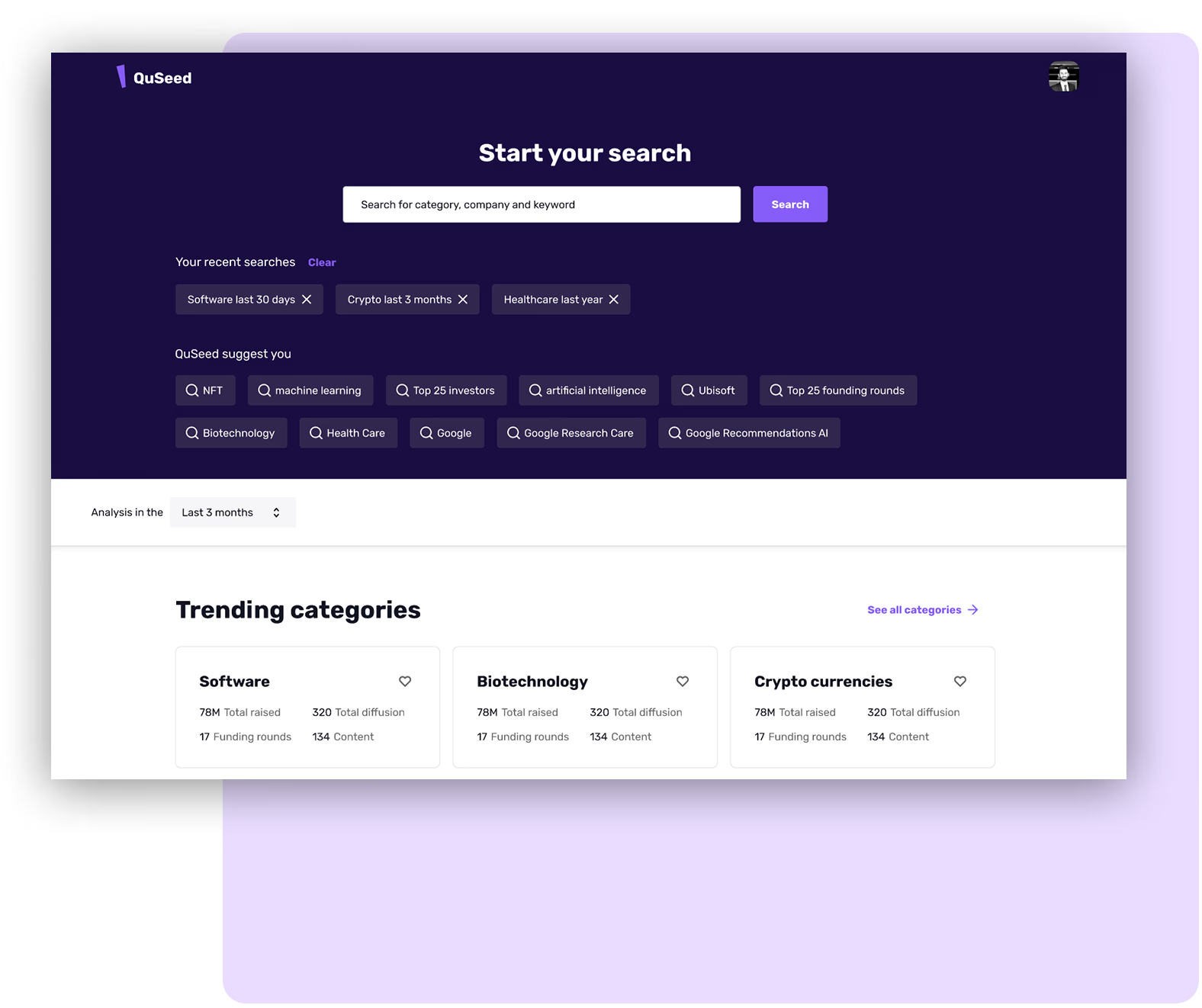
QuSeed is the proprietary tool that feeds this selection: it crosses structured and unstructured data, from industry databases to news and public conversations, to surface the verticals where the six criteria are most likely to find an answer. Candidate niches arrive at the spin-up table already accompanied by the signals that support them.
We find the industries. We look for the people who know them from the inside.
The right co-founder has years of industry behind them, not an idea in their pocket.